
BOOK LAUNCH Kevin Graham, Peter Sirr, and John Banville: The Gallery Press September Titles
The Gallery Press will launch three new titles by Kevin Graham, Peter Sirr, and John Banville at Notre Dame Dublin this September 2026. The Gallery Press is recognized at home and abroad as Ireland’s pre-eminent publisher of Irish poetry and drama in the 21st century.
This event is invite only. Times are in GMT (Dublin).
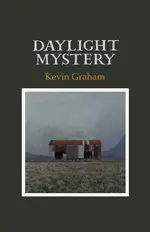
Daylight Mystery (2026) by Kevin Graham
Daylight Mystery, Kevin Graham’s third collection, includes ‘Aspiration’, winner of the 2025 London Magazine Poetry Prize. One of the judges, Fiona Benson, praised its ‘exquisite phrasing and music ... I found myself holding my breath every time I read it.’ The author’s already characteristic sense of line and stanza embody a questioning art that invokes the war diary of Edward Thomas, letters by Oscar Wilde, and other past masters. Elsewhere, poems display precise and memorable details — ‘lawnmowers / clear their throats over so many / rows of back gardens’ while, following an injection of dye for an MRI scan, ‘the flow map I picture / resembles the London Tube’. Ever attentive to the natural world and its consolations, a longer poem, ‘after John Clare’, ‘a scribbler of downright pleasure’ who laments the demise of elm trees, concludes, ‘Miracles have not yet ceased.’
Daylight Mystery confirms Kevin Graham’s emergence as one of our finest new poets.
Cover art: 'Patchwork’ (2024) © Dermot Smyth, oil on canvas, 100 x 100cm
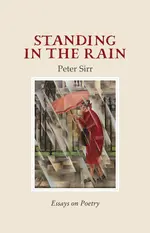
Standing in the Rain (2026) by Peter Sirr
‘A good poet,’ wrote Randall Jarrell in 1951, ‘is someone who manages, in a lifetime of standing out in thunderstorms, to be struck by lightning five or six times.’ For Peter Sirr it’s standing in the rain that counts, thinking about poetry to remind himself of all of poetry’s possibilities.
From the lyrics of Sappho and the hard-won wisdom of the Tang masters to major European figures and the distinctive voices of Irish poets (Seamus Heaney, Thomas Kinsella, Eiléan Ní Chuilleanáin) these essays explore the ‘creative restlessness’ of poets and their ‘unflinching attention’ to the ‘permanent, amplified crisis’ of our times. The book also examines poetry’s role in confronting violence and conflict as it offers ‘moral witness’.
The art of translation runs like a current through his detailed considerations in Standing in the Rain. British, European and American contexts are essential to the author’s ideas about the value and function of poetry.
These engaged and engaging essays invite the reader into a continuous conversation with poets and poems across centuries and cultures.
Cover: ‘Girl Going by Trinity in the Rain’ (1959) by Una Watters (1918-1965), oil on canvas, 81 × 61cm
Presented, Colbert Kearney, 2023 © Dr Rita Kelly/Watters NGI.2023.15. Photo, National Gallery of Ireland
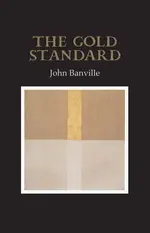
The Gold Standard (2026) by John Banville
John Banville is contemporary literature’s greatest stylist, the worthy heir to Joyce, Nabokov and Updike.
— William Boyd, The Sunday Times
‘Money is the root of all happiness.’ So begins John Banville’s elaborate drama, The Gold Standard, which centres on John Maynard Keynes (1883-1946) whose theories changed the policies and practices of governments. It comes to life, however, in its depiction of his social circle and their ‘tangled lives’. A member of the Bloomsbury Set, Keynes enjoyed relationships with the artist Duncan Grant and Lytton Strachey before he married the Russian ballerina, Lydia Lopokova, scornfully castigated by Virginia Woolf and others for her manners and humble social status. Among other things, it is a play about snobbery and meanness to an outsider who takes away ‘one of their own’. Epic in scale, The Gold Standard spans both world wars and charts the fall of England as the global financial superpower.
Cover: ‘Gold Painting 24’ (1965) by Patrick Scott (1921-2014), 61 x 61cm gold leaf, tempera on unprimed canvas