Notre Dame Dublin students explore the European pilgrimage tradition
Ireland
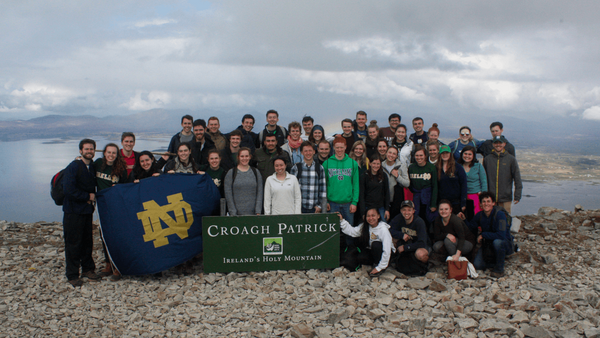
Since serving as the Campus Minister at Notre Dame Dublin, I have become fondly acquainted with the pilgrimages that the Dublin students embark on. The trips to Glendalough, Croagh Patrick, Kylemore and Máméan have a spiritual element and are something I looked forward to as a student when I studied abroad. Now, I enjoy bringing students around Ireland to complete these in my current role. In this past spring semester, the typical bounds of our pilgrimages were expanded. Notre Dame London invited a few of us to participate in the Augustine Camino with them, a walking journey retracing the steps of Saint Augustine. In addition, a group of ND Dublin students were able to travel to Rome for Easter weekend, which has been made possible in the past few years by generous donors. In both of these pilgrimages accompanied by Notre Dame Dublin students, I have seen the universality of our faith, and taken great joy in its genuine beauty across cultures, fostering a deeper understanding of what it means to be a pilgrim.
England
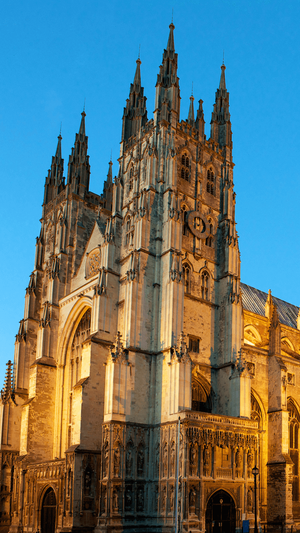
At the end of April, two students and I had the privilege of taking a short flight to London and meeting up with some students and staff from Notre Dame London. After a short train ride to Canterbury, located 50 miles east of London, we toured the breathtaking Canterbury Cathedral, a Catholic-turned Anglican church that Saint Augustine founded in the year 597.
We soon began to understand the significance of what pilgrimage we would shortly be embarking on, the Augustine Camino. Sent by Pope Gregory I, Saint Augustine journeyed from Rome all the way to England in order to convert the Anglo-Saxons to Christianity. This route he took has been walked by pilgrims for more than a millennium.
We started our journey, naively unaware of the arduous trek we had ahead of us. We walked through fields and small rural villages for 25 miles, stopping in various centuries-old churches for a respite from the sun. After reaching our end goal of Ramsgate, we attended Mass in the Shrine of Saint Augustine, our aching legs momentarily forgotten as we were rewarded with a reliquary blessing from a shard of Saint Augustine’s bone.
There was something profound about walking such a far distance retracing the steps of someone from more than a thousand years ago. As I walked with the Dublin and London students, I couldn’t help but wonder about all the pilgrims who shared this same sense of fraternity. We filled the time by sharing our life stories, playing games, and praying the rosary. It’s moving to know how these unmovable truths of friendship and bonding over a shared experience have certainly held true for so long.
Though I couldn’t help but notice the differences between Ireland, my home for the year, and England, we took comfort in the camaraderie we shared with the London group, our new friends by the end of our journey. We compared the two countries, and saw how Saint Augustine and Saint Patrick played similar roles in each land, responsible for the conversion of much of the country. After an exhausting but fulfilling weekend, we travelled back to Ireland.
Italy
Only two weeks later, I flew to Rome to meet 30 of our Dublin students in the Eternal City, to prepare for and celebrate Easter. Every Catholic’s dream, a church more beautiful than the last adorned seemingly every street corner. I got a feel for the city on the evening of Holy Thursday, walking into church after church, the solemn feel of the start of the Triduum feeling almost liminal in the darkened spaces. Each church holds a remarkable history, and often boasts an impressive relic. As I was leaving one church, someone casually said to me, “Have you seen the relic of Mary Magdalene's foot here?” I stayed a bit longer then.
Our trip was made more remarkable with the celebration of the Jubilee. Designated by Pope John Paul II at the end of 2000, the special year invited Catholics from all over the world to become “pilgrims of hope." How fitting and remarkable that the Dublin Programme had the opportunity to experience a pilgrimage of this caliber, to Rome itself!
With the expertise and guidance of Vatican employee Jill Alexy, we embarked on our pilgrimage through Rome to walk through the four pilgrim doors of the Papal basilicas. After walking up the Scala Sancta, the actual steps that Jesus climbed while being condemned to death, we spent our weekend travelling around the city to complete our task. In Saint John Lateran, the seat of the Pope, we prayed to renew our baptismal promises and marveled in what is the oldest and most important church in Rome. In Saint Mary Major, we walked through the door with intentions for Mary to help us emanate her maternal spirit. When we walked through St Paul Outside the Wall, we asked for a strengthened sense of mission for Christ. After seeing Saint Paul’s tomb and touching a piece of the True Cross, we prepared for the early morning Easter Mass at the Vatican.
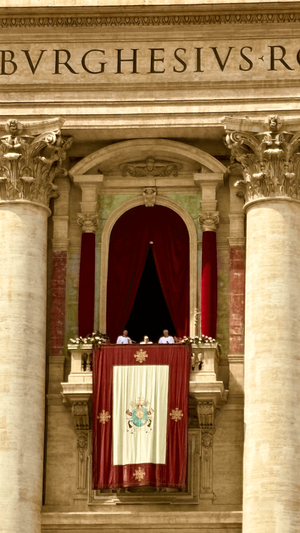
After scoring third row seats at 4 a.m., we witnessed a truly joyful and radiant Easter Mass. I always thought the Vatican would be some sort of Catholic utopia that would be heightened over anything else I had ever experienced. However, I realized this Mass was the same Mass that I attend in Dublin, Notre Dame, and Michigan, and I was receiving the same Eucharist every time. It comforted me to remember the real meaning of catholic and delight in its universality, especially as I saw groups from every imaginable place in the world share in the Sacrament with us. As the Mass concluded, whispers in the crowd dispersed, questioning if we would see Pope Francis. There was a resounding prediction that his health would prevent him from appearing. Soon though, we saw the curtains ruffle, and out appeared the Holy Father. Seeing him evoked a warm feeling of compassion and real joy, as he waved at the thousands of people in the crowd. His frail voice proclaimed his message, as he gave his Easter blessing, including, "Thanks to Christ—crucified and risen from the dead—hope does not disappoint!” As pilgrims of hope, we felt reinvigorated hearing this encouragement from the Pope himself.
We were now ready to complete our pilgrimage by walking through the last Holy Door at Saint Peter’s Basilica. Pilgrims were instructed to walk through this door praying for the Pope himself and his intentions. As we were walking to the Vatican on Monday morning, we heard the news that Pope Francis had just passed away. Shockwaves rippled through the Vatican crowds as more and more people heard the news. Seeing Pope Francis just the day before made it that much more impactful. Despite how surreal the day now felt, we completed our pilgrimage through the Holy Door of Saint Peter’s Basilica, now praying for the repose of the Pope’s soul.
Seeing some of the most beautiful structures man could make was already life-changing. But having the significance of the Jubilee Year, the Easter weekend, and the Pope’s final blessing all wrapped into one weekend felt like it had a divine meaning. Sharing it with the Dublin students and staff brought us closer in a more profound way than could be experienced with trips devoid of spiritual ethos. It showed us the power of a community gathering in one place, and gave us a clearer understanding of who we are as Catholics.
It was rewarding to see the Dublin students, who I have grown close with over the past semester, thrive in atmospheres outside of their comfort zone. I watched it those first few weeks when they landed in Dublin, and I watched it again in England and Rome. By journeying to an unfamiliar place with the intention of pilgrimage, they undoubtedly returned to Dublin with a strengthened sense of their Christian mission. I am so grateful to the Notre Dame family who provide for their students to enrich their education in the true Notre Dame fashion. As Father Moreau said, “The mind must not be cultivated at the expense of the heart." In my experience as the Dublin Campus Minister, there’s certainly no risk of that.